Why Havana’s Real Estate Market Is Rising
At first glance, it makes little sense, yet, Havana’s Real Estate Market is Rising.
Cuba is experiencing one of the worst economic crises in its modern history: rolling blackouts, fuel shortages, mass emigration, collapsing infrastructure, inflation, and a rapidly deteriorating public sector. Yet, in some of Havana’s most desirable neighborhoods, property prices are quietly climbing again.
The contradiction is only apparent on the surface.
What is happening inside Cuba’s real estate market in 2026 is not being driven by economic recovery. It is being driven by expectation.
Recent reports from independent Cuban media and international observers point to renewed activity in Havana’s housing market, particularly in areas like Miramar, Vedado, Nuevo Vedado, and Playa. Luxury homes, restored mansions, and strategically located apartments are attracting renewed attention from buyers inside and outside the island.
The reason is simple: many investors, Cuban-Americans, and members of the diaspora believe Cuba may be approaching another historic transition period.
A Market Built on Anticipation
For decades, Cuba’s real estate sector operated under severe restrictions. Even after limited reforms allowed Cubans to buy and sell homes legally, the market remained highly fragmented, informal, and disconnected from traditional banking systems.
Today, however, a different dynamic is emerging.
The current wave of interest is less about present-day living conditions and more about future positioning.
Investors are not buying based on Cuba’s current economy. They are buying based on what Cuba could become if political or economic reforms accelerate.
This speculative mentality is especially visible in Havana, where architecture, location, and scarcity continue to make certain properties uniquely valuable in the Caribbean market.
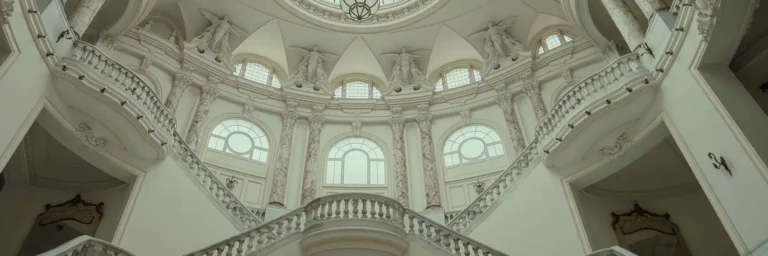
Neighborhoods such as Miramar and Vedado still contain extraordinary pre-revolutionary homes, Art Deco buildings, and mid-century modern structures that would command dramatically higher prices in almost any other regional capital.
For many buyers, the calculation is long-term:
- Acquire assets now while prices remain comparatively low.
- Wait for a possible economic opening.
- Position properties for tourism, hospitality, commercial production, or future redevelopment.
This is not new in Cuba’s history. Similar speculative waves occurred during previous moments of political uncertainty, including after the Obama-era thaw between the United States and Cuba.
The Diaspora Effect on Havana’s Real Estate Market
Another major factor is the Cuban diaspora.
Many Cuban-Americans continue to maintain emotional, cultural, and financial ties to the island. While some are motivated by investment opportunities, others are attempting to secure family properties, retirement homes, or future business footholds in Havana.
In practical terms, foreign capital already plays an indirect role in Cuba’s real estate market through remittances, private agreements, and family networks abroad. Havana’s Real Estate Market is Rising in part, due to the fact that there is a change coming, nobody knows how fast, but everyone sees it.
As the Cuban peso continues losing value and inflation weakens local purchasing power, hard assets like property become one of the few remaining stores of value available to many Cubans.
That creates a paradoxical environment:
the worse the national currency performs, the more attractive real estate becomes for anyone holding dollars or euros.
Havana’s Strategic Value for International Production
For the international film and photography industry, Havana remains one of the most visually unique cities in the world.
Despite decades of economic deterioration, the Cuban capital still offers an unmatched combination of:
- Colonial architecture
- Mid-century modernism
- Soviet-influenced urbanism
- Caribbean atmosphere
- Vintage streetscapes
- Raw urban textures impossible to replicate elsewhere
This is one reason why high-value neighborhoods continue attracting interest from production companies, location scouts, and international creatives.
Properties with rooftop access, large interior courtyards, ocean views, or preserved architectural details are increasingly viewed not only as residential assets, but also as production infrastructure.
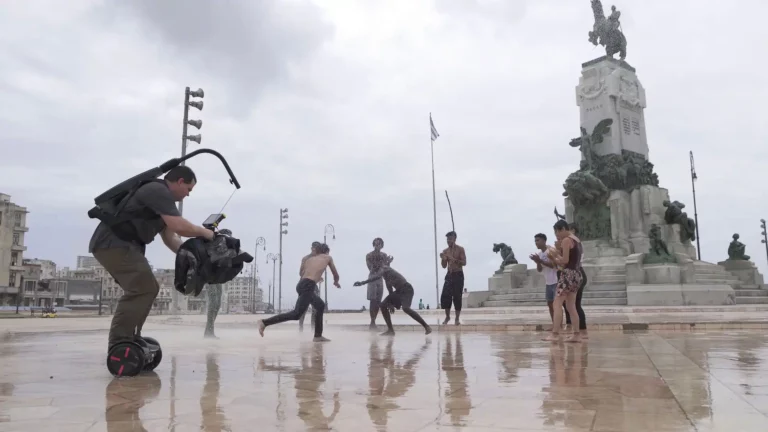
For commercial shoots, television projects, documentaries, and branded content, Havana’s real estate is often part of the visual identity of the production itself.
The Infrastructure Reality
Still, optimism surrounding the market exists alongside a much harsher reality on the ground.
Cuba’s infrastructure crisis continues to deepen:
- Frequent blackouts affect daily life and business operations.
- Water shortages remain common.
- Construction materials are expensive and difficult to obtain.
- Many buildings suffer from decades of deferred maintenance.
- Emigration continues draining skilled labor from the country.
This means that purchasing property in Cuba remains a high-risk environment compared to traditional international real estate markets.
Transactions are often complex, legal protections remain limited, and renovation timelines can become unpredictable due to shortages and bureaucratic obstacles.
In reality, Havana’s real estate market functions less like a stable investment ecosystem and more like a frontier market shaped by political timing.
Reading Between the Lines
The recent increase in housing prices in Havana should not be interpreted as proof of economic recovery.
Instead, it reflects something more psychological:
a growing belief among certain sectors that Cuba may eventually enter another phase of transformation.
Whether those expectations materialize remains uncertain.
But history shows that markets often move before political change becomes visible. In Cuba, perception has always been part of the economy.
And in Havana today, perception is beginning to move again.